Mountains Above, Corals Below: Experiencing St John
- charlesjromeo

- Feb 6
- 5 min read
Updated: May 26

January 31, 2026: Stepping outside, I am reminded of a hot sticky morning in a DC summer. It's never cool in St John, the temperatures, even in January, rarely drop below 73 degrees, but this morning's low is 79, the air is thick. Ugh! It's cloudy, the views will be limited, but I still jump out of bed at first light: coffee, stretch and I'm off. This is my last big run here and I'm determined to run my favorite loop down to the beach and up into the mountains one last time.
St John is a tropical island. Really though, it's a mountain range that juts out of the ocean with deeply scalloped bays fringed with white sand beaches. It's only about 20 square miles, 56 percent of which is Virgin Islands National Park. There are trails in the national park, up and down the mountains--hills as they are mostly referred to on my map, as only a few crest 1,000 ft.

But the hills are challenging to run. This morning, I feel the sweat starting to drip down my legs as I near the top of Margaret Hill, my first climb. I stop at viewpoints to take it all in, catch a breeze, and wipe the sweat from around my eyes before it seeps in and begins to burn. Raindrops spatter me; I am hoping for a short downpour to rinse off the sweat and maybe cool the air; the drips stop, sauna like conditions continue, I keep climbing.
I spent years training through Washington, DC summers. I got better at coping with the heat and humidity, but I never reveled in it. Here though I am drawn to the challenge. The trails are rocky and steep; tangles of roots reach out from the forest. But the trail crews have been busy; the trails are in great shape. Leaves carpet them; they are not over run.
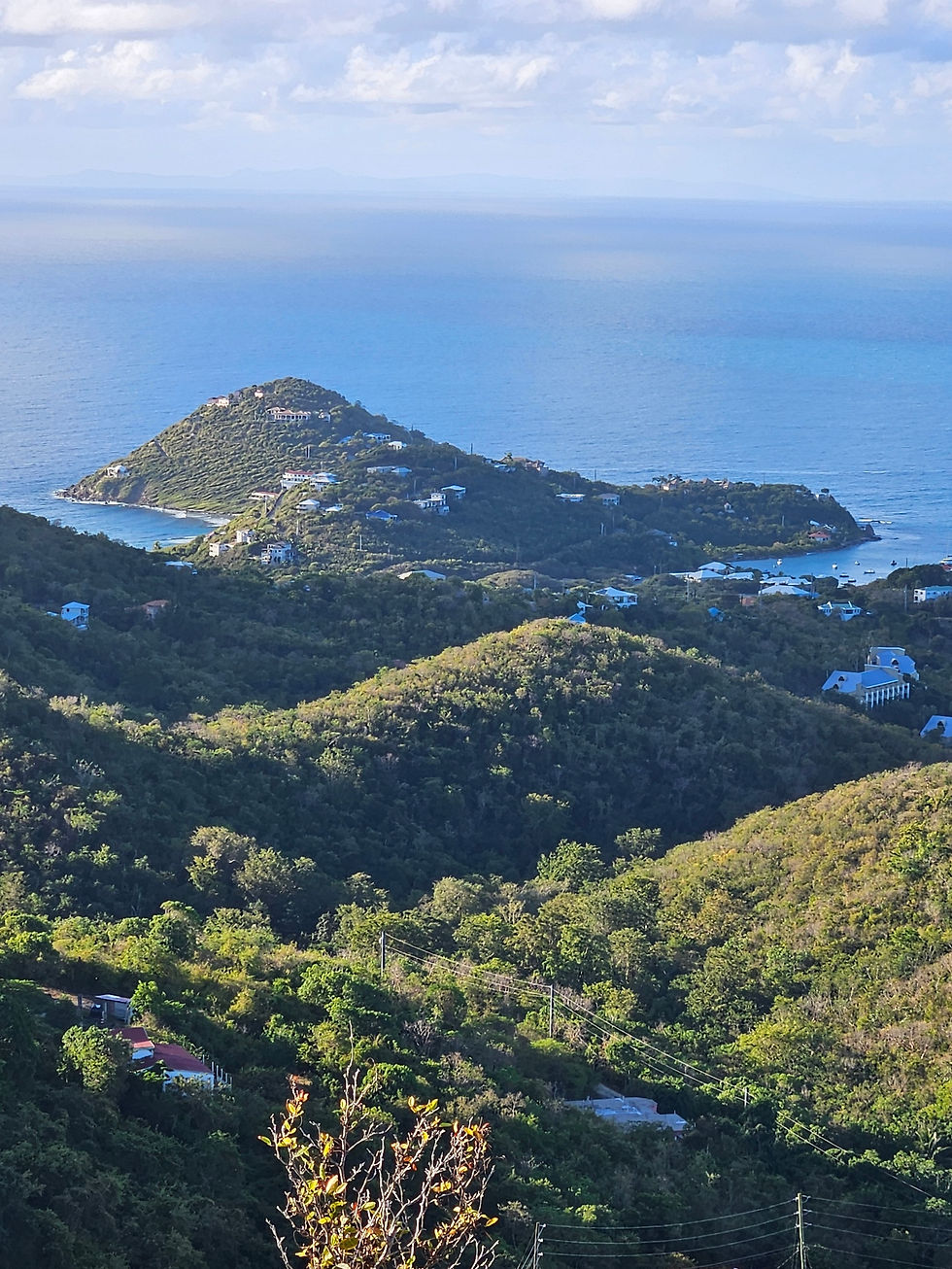
I am drawn to the beauty. The views from lookouts--beaches, small gaps in the forest, rocky perches up high, the platform atop Caneel Hill--are breathtaking. St John is nestled within the US and British Virgin Islands. Small cays and larger islands are all about: emeralds in a sea of stunning blue hues. Not today, but on days when the sky is blue and the mists thin, islands at a greater distance are visible: St Croix 40 miles to the south, Vieques and Puerto Rico 50 and 60 miles respectively to the west.
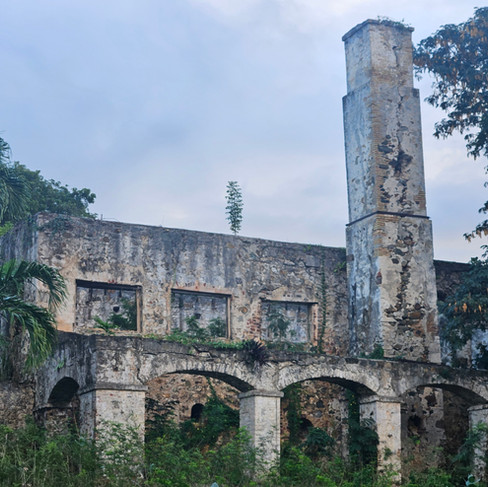
The island’s history is visible in the ruins I run past: old ruins from the era of Danish sugar plantations; new ruins formed in the destruction Hurricane Irma wrought in 2017. Rock walls course through the forest terracing long gone fields of sugarcane. I’ve read a few histories of St John and I sometimes find myself thinking about the lives of those that came before as I move through these remnants. Slavery here was of a particularly brutal variety: the demands of absentee owners, the heat, lack of fresh water, and the work involved in cutting the cane and transforming it into sugar and rum all conspired to make the misery of slavery the worst it could be.



How did they have enough clean water to drink? Reading about two cholera epidemics that killed substantial portions of Cruz Bay’s tiny population in the mid-1800s got me thinking about water.
I met Leo while hiking around a brackish pond behind Francis Bay as we searched for flamingos. There are ponds like this in a number of spots around the island, including one near Cruz Bay. Leo is a St John native with a good background in its history. Is this what people drank during droughts? And even when there was enough water, how did they keep bacteria from setting up shop? Activated charcoal was Leo’s answer. Produced by heating coconut husks or wood it cleans water by adsorbing contaminants: chunks of activated charcoal were dropped into containers or wells of fresh water. Activated charcoal, however, isn’t a complete solution for bacteria—it kills the bacteria’s food supply, but not the bacteria itself, and this may be why cholera tormented St John’s early residents.

It wasn’t until the United States purchased St John, St Croix and St Thomas in 1917 and began investing in water treatment, sanitation, road building, health care and education that things began improving for the island’s Afro Caribbean population. Even then, it took recognition of St John’s beauty by Governor Cramer, the Virgin Islands governor in the 1930s, and a budding travel industry to change St John’s fortunes.
One of the topics Governor Cramer returned to repeatedly was building trails to allow visitors to explore the island. Not the trails we hike and run on today, horse trails that improved old washed-out plantation routes. The current system of rugged trails was built after the national park was established in 1956.
I'm not the only one who finds challenge and beauty in running these trails. The St John Trail Race is a tough race that links together trails connecting Cruz Bay in the west to Coral Bay in the east. It's a 14.2-mile sweat fest that climbs up and down the mountains along the island's spine. It attracts a small group of diehards; I've run it twice. (A link to the story of my first race is below.)
Beyond the network of trails there are, of course, beaches and corals. St John is at least as stunning under the water as it is above. The development of the modern diving mask in the 1930s made this underwater world accessible and certainly contributed to St John’s growing tourism. The reefs appeared stressed on many of my snorkeling swims on this trip: overuse, hurricanes and climate change--the most feared culprit. But I also noticed that soft corals that were largely eliminated by Irma are regrowing. The reef in Frances Bay, which was obliterated, is making a comeback. It had been a beautiful garden of sea fans; small fans now populate a redeveloping coral community. I also got directed to a reef that survived Irma unscathed. I haven’t seen a reef that beautiful since the beforetime. It’s a reef that’s relatively unknown, but it should be as affected by climate change as every other reef. It gave me hope that we still have time.

I decide to make a second trip to Honeymoon Bay on this morning's run. In part, I want to lengthen the run; it's a small island, distances are short. I also want to stop and take in the view one more time. A chicken races across my path as I head to the beach. I smile. Chickens, roosters and baby chicks, donkeys, deer and goats are out and about in the towns, on the beaches, in the hills. They add to the island's quirkiness, it's charm. I look out at the bay; I watch the chicken peck at a branch. I turn and start back.
St John Trail Race story:


I love this one Chuck. It brought me back to the memories of the one time I visited St. John. It is a beautiful, magical place!
Relaxing, contemplative, rich in history, flora, and fauna. I shudder at the thought of the heat and humidity. Thanks for an enjoyable read!